
Recommended Reading - The Stewardship of Wealth
Updated: Jun 1

A note from Arthur Salzer, CFA, CIM, CEO and Founder of Northland Wealth
You have spent decades building substantial wealth. The structures are in place. Yet the historical record on multigenerational family fortunes tells a consistent story, and it is not a comfortable one. Most significant fortunes erode substantially within two or three generations. Not through catastrophe. Through the slow, invisible compounding of three forces working against the family at once.
Those forces are not market risk. They are the costs layered onto returns, the taxes managed poorly, and the conflicts of interest that redirect wealth away from the family and toward the institutions ostensibly serving it.
Gregory Curtis spent his career studying exactly that pattern. As the founder of Greycourt & Co., one of the original multi-family offices in the United States, he had an unusually clear vantage point: advising extraordinarily wealthy families over decades, watching what preserved wealth and what quietly eroded it. The Stewardship of Wealth: Successful Private Wealth Management for Investors and Their Advisors (Wiley, 2012) is that career distilled into a framework.
I have read a great many books recommended by advisors who had clearly not read them. This is not one of those cases. I read this book when it was published. I met Curtis when we were both speaking at the Opal Group's Family Office & Private Wealth Management Forum in Newport; he was generous with his time afterward. The signed copy in my library is from that conversation. Every new Northland team member reads it, not because it tells them what to think, but because it trains them to ask the questions UHNW families deserve to have asked on their behalf.
Why do most wealthy families fail to preserve what they built?
Curtis's central thesis is simple: wealth that survives generations is managed differently than wealth that does not, and most of the difference comes down to structure, not to investment performance. The families that preserve and grow their wealth across generations invest like institutions rather than individuals, demand genuine independence from their advisors, and understand the full cost of the advice they receive. Not just the visible fee, but the costs embedded in product selection, portfolio turnover, and tax inefficiency.
The families that lose ground share a different pattern. They keep advisors whose incentives are misaligned with the family's interests. They hold portfolios that appear diversified on paper but behave as a single asset class in a downturn. They bear compounding costs they cannot see and often do not think to ask about.
Curtis is careful to distinguish the return problem from the structural problem. Most affluent families eventually find advisors capable of producing reasonable investment returns. The failure is rarely in the investment selection. It is in the costs layered on top, the taxes managed poorly, and the conflicts of interest that redirect resources away from the family and toward the institutions that serve them.
What does the book argue the most successful families actually do differently?
Curtis profiles the investment approach of the wealthiest endowments and a small number of highly sophisticated private family offices, then asks a pointed question: why do so few private families invest this way?
The endowment model, as he describes it, has several defining characteristics. It allocates meaningfully to alternatives: private equity, private credit, real assets, and absolute return strategies. It views liquidity as a cost to be paid purposefully rather than a comfort to be maintained habitually. It selects advisors on the basis of genuine independence rather than institutional affiliation. It builds portfolios around long time horizons rather than short-term performance comparisons.
Most private advisors cannot deliver this approach. Not because they lack competence, but because the firms they work for are structured to deliver something else. Proprietary investment products, commission-based compensation, and dual-capacity relationships where the same firm acts as both advisor and product manufacturer create incentive frameworks that systematically redirect wealth.
Curtis identifies the conflict-of-interest problem as the single most persistent threat to multigenerational wealth. Not market volatility. Not inflation. Not poor estate planning. The structural misalignment between what advisors are paid to recommend and what families actually need. He argues this misalignment does more sustained damage to family wealth than any bear market in the historical record. And unlike a bear market, it never reverses.
His prescription follows directly from his diagnosis: retain an advisor who earns no revenue from the products they recommend, has no relationship with the managers they select, and has no incentive other than the fee paid directly by the client family. This is what a genuine fiduciary relationship looks like. Curtis argues it is rarer than most affluent families assume.
How does the conflict-of-interest problem apply to Canadian families specifically?
Curtis writes from an American perspective. The regulatory specifics he references differ from Canada's framework. But his core argument applies to the Canadian context with considerable precision, and in some respects more sharply.
Canada's investment advisory market is concentrated among bank-owned dealers. The advisors working within that structure often genuinely care about their clients. That is not the question Curtis raises. He asks whether the structure those advisors operate within allows them to fully act on that care. When a significant portion of the available product shelf generates higher revenue than the alternatives, the answer becomes complicated.
Canada's Client Focused Reforms, which came into force in 2021, strengthened suitability obligations and moved the standard meaningfully in the direction Curtis advocates. But regulatory change and structural independence are not the same thing. An advisor employed by a firm that manufactures investment products operates within that structure regardless of the regulatory overlay.
For Canadian families, the question Curtis poses is direct: who in your advisory relationship has no revenue relationship with the products they recommend to you?
At Northland, that question shaped how the firm was built. We are registered with the Ontario Securities Commission as a Portfolio Manager, operating under a fiduciary standard. We hold no proprietary products. We earn no commissions. Nothing flows to Northland from product manufacturers. When we recommend a private equity manager, it is because the diligence supports the recommendation and for no other reason.
Curtis did not design the Northland model. But reading his work in 2012, shortly after founding the firm, confirmed that the questions he was asking were the questions Northland was already trying to answer.
Why does this book still matter more than a decade after publication?
The Stewardship of Wealth was published in 2012. Some regulatory references are dated. The alternatives market has evolved considerably. But the structural argument at the centre of the book has become more relevant over time, not less. The problems Curtis identified have not been solved by regulation, by fee compression, or by the passage of time.
The Canadian ultra high net worth market has grown substantially since Curtis wrote this. More families now have the scale to access the independent family office model he describes. The alternatives universe available to sophisticated Canadian investors has expanded. Regulatory pressure on fee transparency has intensified. Families are asking harder questions of their existing advisors than they were a decade ago.
The families that will succeed across the next generation are asking Curtis's questions now. Who does my advisor work for? What is the full cost of my portfolio? Is my allocation designed around my family's actual time horizon and liquidity requirements, or around a product distribution model? Those are not comfortable questions to raise with a relationship built over years. They are the questions that define what stewardship actually means.
A companion read: The Cycle of the Gift by James E. Hughes Jr., Susan Massenzio, and Keith Whitaker
No reading list on multigenerational wealth is complete without James Hughes. Where Curtis addresses the financial mechanics of wealth preservation, Hughes addresses the human dimension: how families transmit not just assets, but the judgment, governance, and trust that those assets depend on.
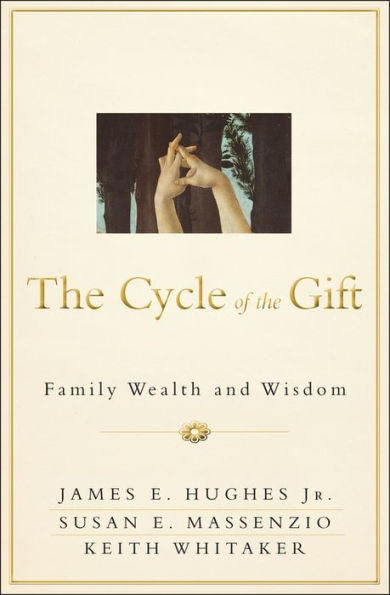
The Cycle of the Gift: Family Wealth and Wisdom (Bloomberg Press, 2013) examines the act of giving within wealthy families across its full complexity, from the intention behind a gift to its effect on the recipient to the long arc of what that transfer means for the family system. Hughes, Massenzio, and Whitaker argue that the most consequential gifts wealthy families pass down are not financial, and that families which focus exclusively on the financial dimension often inadvertently undermine the conditions that financial wealth requires to endure.
If Curtis explains why the structure matters, Hughes explains why the family matters. Both are required reading at Northland.
About the Author
Arthur Salzer, CFA, CIM is the CEO and Founder of Northland Wealth Management Inc. He founded the firm in June 2011 with the conviction that Canadian ultra-high-net-worth families deserve the same institutional investment approach available to the world's largest endowments and foundations. Arthur writes on investment philosophy, macroeconomics, energy and materials, and the policy environment affecting Canadian private wealth. He has advised UHNW families through multiple market cycles and writes the firm's flagship investment commentary on The Artisan.


